---
title: What is district heating made of? Energy sources & composition - aquatherm UK
description: From which sources does district heating come, and how is it generated? Everything you need to know about composition and structure ► Read now.
image: https://blog.aquatherm.de/hubfs/Blog/Woraus%20besteht%20Fernw%C3%A4rme/woraus-besteht-fernwaerme-energiequellen-und-zusammensetzung.jpg
---
Deutschland
[tel:+491234567](tel:+491234567)
UK
Menu
close
- - Menu
- Solutions & Products
- [Solutions & Products](https://www.aquatherm.de/en-gb/solutions-products/)
- Products
- [Products](https://www.aquatherm.de/en-gb/solutions-products/products/)
- [AQUATHERM BLACK](https://www.aquatherm.de/en-gb/solutions-products/products/aquatherm-black/)
- [AQUATHERM BLUE](https://www.aquatherm.de/en-gb/solutions-products/products/aquatherm-blue/)
- [AQUATHERM GREEN](https://www.aquatherm.de/en-gb/solutions-products/products/aquatherm-green/)
- [AQUATHERM RED](https://www.aquatherm.de/en-gb/solutions-products/products/aquatherm-red/)
- [AQUATHERM ENERGY](https://www.aquatherm.de/en-gb/solutions-products/products/aquatherm-energy/)
- [AQUATHERM SERVICES](https://www.aquatherm.de/en-gb/solutions-products/products/aquatherm-services/)
- [Applications](https://www.aquatherm.de/en-gb/solutions-products/applications/)
- [Industries](https://www.aquatherm.de/en-gb/solutions-products/industries/)
- [References](https://www.aquatherm.de/en-gb/solutions-products/references/)
- aquatherm know-how
- [aquatherm know-how](https://www.aquatherm.de/en-gb/aquatherm-knowhow/)
- Planning tools
- [Planning tools](https://www.aquatherm.de/en-gb/aquatherm-knowhow/planning-tools/)
- [Product finder](https://www.aquatherm.de/en-gb/aquatherm-knowhow/planning-tools/product-finder/)
- [BIM-Data](https://www.aquatherm.de/en-gb/aquatherm-knowhow/planning-tools/bim-data/)
- [Head loss calculator](https://www.aquatherm.de/en-gb/aquatherm-knowhow/planning-tools/head-loss-calculator/)
- [Linear expansion calculator](https://www.aquatherm.de/en-gb/aquatherm-knowhow/planning-tools/linear-expansion-calculator/)
- [Trainings](https://www.aquatherm.de/en-gb/aquatherm-knowhow/trainings/)
- Processing
- [Processing](https://www.aquatherm.de/en-gb/aquatherm-knowhow/processing/)
- [AQUATHERM BLACK](https://www.aquatherm.de/en-gb/aquatherm-knowhow/processing/aquatherm-black/)
- [AQUATHERM BLUE](https://www.aquatherm.de/en-gb/aquatherm-knowhow/processing/aquatherm-blue/)
- [AQUATHERM GREEN](https://www.aquatherm.de/en-gb/aquatherm-knowhow/processing/aquatherm-green/)
- [AQUATHERM RED](https://www.aquatherm.de/en-gb/aquatherm-knowhow/processing/aquatherm-red/)
- [AQUATHERM ENERGY](https://www.aquatherm.de/en-gb/aquatherm-knowhow/processing/aquatherm-energy/)
- Knowledge Base
- [Knowledge Base](https://www.aquatherm.de/en-gb/aquatherm-knowhow/knowledge-base/)
- [Blog](https://blog.aquatherm.de/en-gb)
- [Content Hub](https://info.aquatherm.de/en-gb/aquatherm-whitepaper-guide-for-download)
- [EPDs and Certificates](https://www.aquatherm.de/en-gb/aquatherm-knowhow/knowledge-base/epds-and-certificates/)
- [Downloads](https://www.aquatherm.de/en-gb/aquatherm-knowhow/knowledge-base/downloads/)
- [Frequently asked questions](https://www.aquatherm.de/en-gb/aquatherm-knowhow/knowledge-base/frequently-asked-questions/)
- Company
- [Company](https://www.aquatherm.de/en-gb/company/)
- About us
- [About us](https://www.aquatherm.de/en-gb/company/about-us/)
- [Sustainability](https://www.aquatherm.de/en-gb/company/about-us/sustainability/)
- [Quality](https://www.aquatherm.de/en-gb/company/about-us/quality/)
- [Locations](https://www.aquatherm.de/en-gb/company/locations/)
- [International partners](https://www.aquatherm.de/en-gb/company/international-partners/)
- [News](https://www.aquatherm.de/en-gb/company/news/)
- [Contact](https://www.aquatherm.de/en-gb/company/contact/)
- [Call aquatherm](tel:+4927229500)
- [Search](https://www.aquatherm.de/en/find/)
- Choose language
- Quicklinks
- [Contact](https://www.aquatherm.de/en-gb/company/contact/)
- [Find international partners](https://www.aquatherm.de/en-gb/company/international-partners/)
- [Blog](https://blog.aquatherm.de/en-gb)
- [Content Hub](https://info.aquatherm.de/en-gb/aquatherm-whitepaper-guide-for-download)
- [Planning tools](https://www.aquatherm.de/en-gb/aquatherm-knowhow/planning-tools/)
- [Downloads](https://www.aquatherm.de/en-gb/aquatherm-knowhow/knowledge-base/downloads/)
- [News](https://www.aquatherm.de/en-gb/company/news/)
###### UK
##### Choose your region:
[Germany](https://blog.aquatherm.de/woraus-besteht-fernwaerme-energiequellen-zusammensetzung) [Global](https://blog.aquatherm.de/en/what-is-district-heating-made-of) [United Kingdom](https://blog.aquatherm.de/) [Italy](https://blog.aquatherm.de/) [Iberica](https://blog.aquatherm.de/)
District heating
# What is district heating made of? Energy sources & composition \_\_
1.
2. [aquatherm Blog](https://blog.aquatherm.de/en-gb)
3. What is district heating made of? Energy sources & composition
18\. November 2025 4 min.
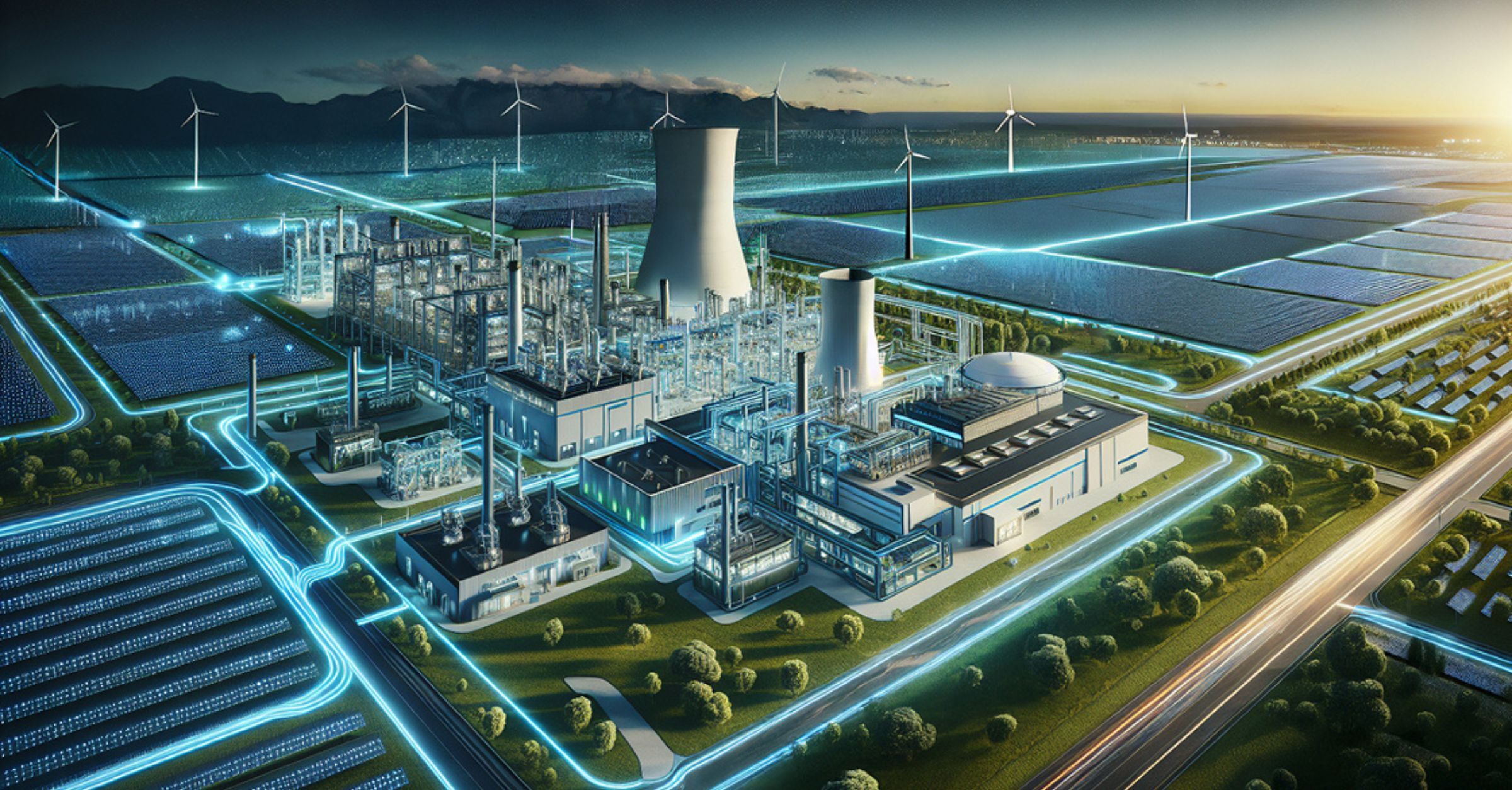
At first glance, the question of how district heating is produced and what it consists of may seem simple, but it touches on central aspects of the energy transition. District heating is not a homogeneous fuel, but an energy source whose composition varies greatly depending on the country, city, or supplier. Whether it comes from natural gas, coal, biomass, industrial waste heat, or renewable technologies such as solar thermal energy and large-scale heat pumps, the energy mix determines efficiency, emissions, and cost-effectiveness.
#### This blog covers:
- How district heating is generated and what it consists of, which are key factors for efficiency and climate protection.
- Which energy sources and technologies determine the energy mix of district heating.
- How district heating networks are structured to distribute heat reliably.
- Which pipe systems minimise heat losses and increase operational reliability.
- How renewable sources and modern network technology will shape the green district heating of the future.
## Sources and technologies: How is district heating generated?
The composition of district heating is strongly influenced by regional framework conditions. While some countries continue to let fossil fuels dominate, others are already consistently relying on renewable heat sources and industrial waste heat. A recent analysis by **the IEA** and **Euroheat & Power** shows that globally, district heating is still predominantly based on coal and natural gas. However, Europe is advancing more rapidly in integrating renewable sources and waste heat from data centres. Scandinavian countries are leading the way, while Eastern Europe and North America are lagging behind. These differences make it clear that the question "what district heating consists of" cannot be answered globally. It is determined regionally and politically, and changes dynamically with investment cycles and climate targets.
## How is district heating generated? The process chain
To understand how district heating worksit is important not only to consider the energy mix, but also the entire technical conversion chain. From the source to the heating surface in the building, heat passes through several stages, where efficiencies and losses are critical. A district heating system connects several levels to form a continuous infrastructure.
The focus is on **the generation plants** – heating plants, CHP plants, or heat pumps – supplemented by **storage systems** that cushion peak loads and **pumping stations** that maintain pressure and flow throughout network. The backbone of the system is the **pipeline network**, where heated water circulates between production and consumers.
## Structure and distribution of district heating
An efficient district heating system depends crucially on the structure and design of the distribution network. While components such as the generation plant, storage system, and transfer stations are relatively fixed from a technical perspective, the grid structure offers flexibility that significantly influences security of supply, efficiency, and adaptability.
### How is district heating generated and distributed?
What district heating consists of depends on the respective energy mix or the available sources. Equally important is the question: how does heat reach consumers? Different types of networks are used depending on demand and topography:
- **Radiant network (radial network):**
Heat is conducted from a central source via branches to consumers. This system is simple in structure and particularly suitable for smaller cities or districts with clear load profiles.
- **Ring network (loop network):**
Pipes run in closed loops so that heat can be fed in from several directions. This creates a redundant pipeline route: if a section or a feed-in point fails, the heat supply can be maintained via the opposite line. This significantly increases security of supply and facilitates future grid expansions or integration of additional heat sources.
- **Hybrid or multi-source network:**
Several heat sources such as waste heat, solar thermal energy, or biomass are integrated into a common system. Automated controls distribute heat based on demand, increasing efficiency and resilience.
- **5th generation / Cold or ambient networks:**
These systems operate at low temperatures of around 10–25 °C. Heat pumps in buildings raise the temperature level individually, reducing energy losses and allowing some buildings to be heated while others are cooled simultaneously.
### Pipe systems for district heating
Traditionally, steel or cast iron pipes dominate high-temperature networks. In low-temperature or district networks, plastic pipes or PP systems are increasingly important. Key benefits include:
- **Corrosion-free and chemical stability:** ensuring long-term operational reliability.
- **Low thermal conductivity:** can reduce [heat losses](https://blog.aquatherm.de/en-gb/heat-loss-in-district-heating) along the pipe sections, as the material provides a partially insulating effect (aquatherm energy: thermal conductivity \< 0.027 W/mK).
- **Easier installation and lighter weight**: particularly beneficial for neighbourhood or retrofit projects, which can reduce assembly times and costs.
- **Heat fusion technology:** making connections at least as tight and robust as the pipe itself.
## Future of district heating – development and trends
District heating is undergoing a fundamental structural transformation. While fossil fuels continue to dominate the energy mix in many regions, political requirements, technological innovations, and economic factors are accelerating the transition to [green district](https://blog.aquatherm.de/en-gb/green-district-heating) heating based on renewable and waste heat sources.
**Political objectives as drivers**
The European Union is pursuing ambitious goals through the "Fit for 55" package and the Renewable Energy Directive (RED III): By 2030, [decarbonisation of district heating](https://blog.aquatherm.de/en-gb/decarbonisation-of-district-heating-strategies-and-technologies) is to be significantly expanded. District heating is a key instrument because it can tap into waste heat sources and systemically integrate various renewable technologies.
**Technological innovations**
The use of large heat pumps **is growing dynamically**. Cities such as Hamburg and Copenhagen use river water or wastewater to raise heat to a grid-compatible temperatures. **Power-to-heat technologies,** such as electrode boilers and heat pumps, convert surplus renewable electricity into heat, relieving the load on power grids. **Large-scale solar thermal energy** is also experiencing a resurgence, particularly in Denmark, where collector fields over 100,000 m² feed district heating networks. In addition, there are projects for **deep geothermal energy**, such as in Munich, which aims to fully convert its network to geothermal sources by 2040.
**Strategic factors influencing the composition**
The composition of district heating is not determined solely by technical options. It results from an interplay of infrastructure, market mechanisms, and political frameworks. International studies show that the pace of transformation depends on how these factors interact.
The grid structure determines the range of possible energy sources. A 2019 analysis in *Energy, Sustainability and Society* shows that building density, heat load, and insulation standards are decisive for the profitability of district heating. Political instruments accelerate the transition: a 2022 report by the Pacific Northwest National Laboratory identifies CO₂ pricing, targeted subsidies, and local heat planning as key levers. A 2023 case study on the Finnish district heating sector highlights the crucial role of housing associations, industry, and citizens in successfully implement projects.
## Conclusion – What shapes the composition of district heating
District heating consists of a dynamic energy mix. The strategic challenge is to reduce dependence on fossil fuels while maintaining security of supply and economic viability. The interaction of all dimensions – technology, market, and politics – is crucial and must be carefully coordinated.
The experts at aquatherm support you with fact-based analyses, evaluation of network structures, and guidance on technology options. Get in touch to define the next steps for your district heating project.
**[Contact](https://www.aquatherm.de/en-gb/company/contact/) us today to start your project assessment.**
[](https://hubspot-cta-redirect-eu1-prod.s3.amazonaws.com/cta/redirect/25129160/1227b602-d75c-4f47-9e4e-e530011752a9)
### Related posts
## [Difference between district heating and local heating explained](https://blog.aquatherm.de/en-gb/difference-between-district-heating-and-local-heating-explained)
27\. August 2025
District heating and local heating are two central supply concepts for a climate-friendly heat supply. But what are the differences - technically,...
Reading time: 9 Min.
## [Green district heating: Sustainable heat for the energy transition](https://blog.aquatherm.de/en-gb/green-district-heating)
19\. September 2025
If the heat transition is to be more than just symbolic politics, it needs new infrastructure. Green district heating offers the greatest untapped...
Reading time: 8 Min.
## [Decarbonisation of district heating: strategies and technologies](https://blog.aquatherm.de/en-gb/decarbonisation-of-district-heating-strategies-and-technologies)
26\. August 2025
How can the climate-friendly heating transition succeed in metropolises, cities, and municipalities worldwide – and do so in a safe and affordable...
Reading time: 10 Min.
[To overview page](https://blog.aquatherm.de/)
#### Topics
- [BIM (3)](https://blog.aquatherm.de/en-gb/tag/bim)
- [District heating (14)](https://blog.aquatherm.de/en-gb/tag/district-heating)
- [Drinking water (6)](https://blog.aquatherm.de/en-gb/tag/drinking-water)
- [Further topics (13)](https://blog.aquatherm.de/en-gb/tag/further-topics)
- [Maritime applications (4)](https://blog.aquatherm.de/en-gb/tag/maritime-applications)
- [Modern data centre cooling (12)](https://blog.aquatherm.de/en-gb/tag/modern-data-centre-cooling)
- [Prefabrication (4)](https://blog.aquatherm.de/en-gb/tag/prefabrication)
- [Processing (3)](https://blog.aquatherm.de/en-gb/tag/processing)
- [Surface heating & cooling (5)](https://blog.aquatherm.de/en-gb/tag/surface-heating-cooling)
Show more
---
#### Top 5 Posts
| 1 | [Backflow preventers in drinking water systems: What matters](https://blog.aquatherm.de/en-gb/backflow-preventers-in-drinking-water-systems-what-matters) |
| --- | --- |
| 2 | [Drinking Water Supply: Systems, Planning and Infrastructure](https://blog.aquatherm.de/en-gb/drinking-water-supply-systems-planning-infrastructure) |
| 3 | [Drinking water hygiene: What matters in building installations](https://blog.aquatherm.de/en-gb/drinking-water-hygiene-what-matters) |
| 4 | [Legionella in drinking water: Responsibilities & prevention](https://blog.aquatherm.de/en-gb/legionella-in-drinking-water-responsibilities-prevention) |
| 5 | [Adsorption chillers in shipbuilding: technology and applications](https://blog.aquatherm.de/en-gb/adsorption-chillers-shipbuilding-technology) |
---
### Subscribe to our newsletter:
Deutschland
aquatherm UK | Unit 9 Saracen Close, Gillingham
ME80QN Kent | United Kingdom
Tel: **+44 1444 250500**
Mail: **enquiries@aquatherm-uk.com**
[Contact](https://www.aquatherm.de/en-gb/company/contact/)
Newsletter abonnieren
Закрыть
- - APPLICATION FIELDS
- [Heating system construction](https://www.aquatherm.de/en-gb/solutions-products/applications/heating-system-construction/)
- [Refrigeration](https://www.aquatherm.de/en-gb/solutions-products/applications/refrigeration/)
- [Heating and cooling networks](https://www.aquatherm.de/en-gb/solutions-products/applications/heating-and-cooling-networks/)
- [Fire protection and sprinkler systems](https://www.aquatherm.de/en-gb/solutions-products/applications/fire-protection-and-sprinkler-systems/)
- [All applications](https://www.aquatherm.de/en-gb/solutions-products/applications/)
- - INDUSTRIES
- [Data centres](https://www.aquatherm.de/en-gb/solutions-products/industries/cooling-technology-for-data-center-providers/)
- [Infrastructure](https://www.aquatherm.de/en-gb/solutions-products/industries/infrastructure/)
- [Health sector](https://www.aquatherm.de/en-gb/solutions-products/industries/health-sector/)
- [Industrial buildings](https://www.aquatherm.de/en-gb/solutions-products/industries/industrial-buildings/)
- [All sectors](https://www.aquatherm.de/en-gb/solutions-products/industries/)
- - Service
- [Knowledge Base](https://www.aquatherm.de/en-gb/aquatherm-knowhow/knowledge-base/)
- [Planning tools](https://www.aquatherm.de/en-gb/aquatherm-knowhow/planning-tools/)
- [Trainings](https://www.aquatherm.de/en-gb/aquatherm-knowhow/trainings/)
- [Contact](https://www.aquatherm.de/en-gb/company/contact/)
- [All services](https://www.aquatherm.de/en-gb/aquatherm-knowhow/)
- - Quicklinks
- [Blog](https://blog.aquatherm.de/en-gb)
- [News](https://www.aquatherm.de/en-gb/company/news/)
- [Frequently asked questions](https://www.aquatherm.de/en-gb/aquatherm-knowhow/knowledge-base/frequently-asked-questions/)
- - Products
- [aquatherm black](https://www.aquatherm.de/en-gb/solutions-products/products/aquatherm-black/)
- [aquatherm blue](https://www.aquatherm.de/en-gb/solutions-products/products/aquatherm-blue/)
- [aquatherm green](https://www.aquatherm.de/en-gb/solutions-products/products/aquatherm-green/)
- [aquatherm red](https://www.aquatherm.de/en-gb/solutions-products/products/aquatherm-red/)
- [aquatherm energy](https://www.aquatherm.de/en-gb/solutions-products/products/aquatherm-energy/)
- [aquatherm services](https://www.aquatherm.de/en-gb/solutions-products/products/aquatherm-services/)
- [All products](https://www.aquatherm.de/en-gb/solutions-products/products/)
- - References
- [Orsolina28, Italy](https://www.aquatherm.de/en-gb/solutions-products/references/orsolina28-italy/)
- [“mikado”, Germany](https://www.aquatherm.de/en-gb/solutions-products/references/mikado-germany/)
- [DJO, Germany](https://www.aquatherm.de/en-gb/solutions-products/references/djo-germany/)
- [Multivac, Germany](https://www.aquatherm.de/en-gb/solutions-products/references/multivac-germany/)
- [Spree tower, Germany](https://www.aquatherm.de/en-gb/solutions-products/references/spree-tower-germany/)
- [Vioser S.A., Greece](https://www.aquatherm.de/en-gb/solutions-products/references/vioser-sa-greece/)
- [All references](https://www.aquatherm.de/en-gb/solutions-products/references/)
- - Company
- [About us](https://www.aquatherm.de/en-gb/company/about-us/)
- [Locations](https://www.aquatherm.de/en-gb/company/locations/)
- [News](https://www.aquatherm.de/en-gb/company/news/)
- [Everything about the company](https://www.aquatherm.de/en-gb/company/)
---
Copyright © 2026 aquatherm GmbH. All rights reserved.
EN-GB
---
- [Privacy policy](https://www.aquatherm.de/en-gb/privacy-policy/)
- [Imprint](https://www.aquatherm.de/en-gb/imprint/)
- [Legal notice](https://www.aquatherm.de/en-gb/legal-notice/)
- [T&Cs (UK)](https://www.aquatherm.de/en-gb/tcs/)
- [T&Cs (HQ)](https://www.aquatherm.de/en-gb/tcs-hq/)
---
---
All content presented on this regional aquatherm website applies to region UK.
[Back to top](https://blog.aquatherm.de/en-gb/what-is-district-heating-made-of#top)
```json
{
"@context" : "https://schema.org",
"@type" : "BlogPosting",
"author" : {
"@type" : "Person",
"name" : "Admin",
"url" : "https://blog.aquatherm.de/en-gb/author/admin"
},
"dateModified" : "2026-09-02T05:45:14.048Z",
"datePublished" : "2025-11-18T06:56:37.000Z",
"headline" : "What is district heating made of? Energy sources & composition",
"image" : [ "https://blog.aquatherm.de/hubfs/Blog/Woraus%20besteht%20Fernw%C3%A4rme/woraus-besteht-fernwaerme-energiequellen-und-zusammensetzung.jpg" ],
"mainEntityOfPage" : {
"@id" : "https://blog.aquatherm.de/en-gb/what-is-district-heating-made-of",
"@type" : "WebPage"
},
"publisher" : {
"@type" : "Organization",
"logo" : {
"@type" : "ImageObject",
"url" : "https://blog.aquatherm.de/hubfs/aquatherm_Logo_RGB_gradient-green_mSZ.png"
},
"name" : "aquatherm GmbH"
}
}
```