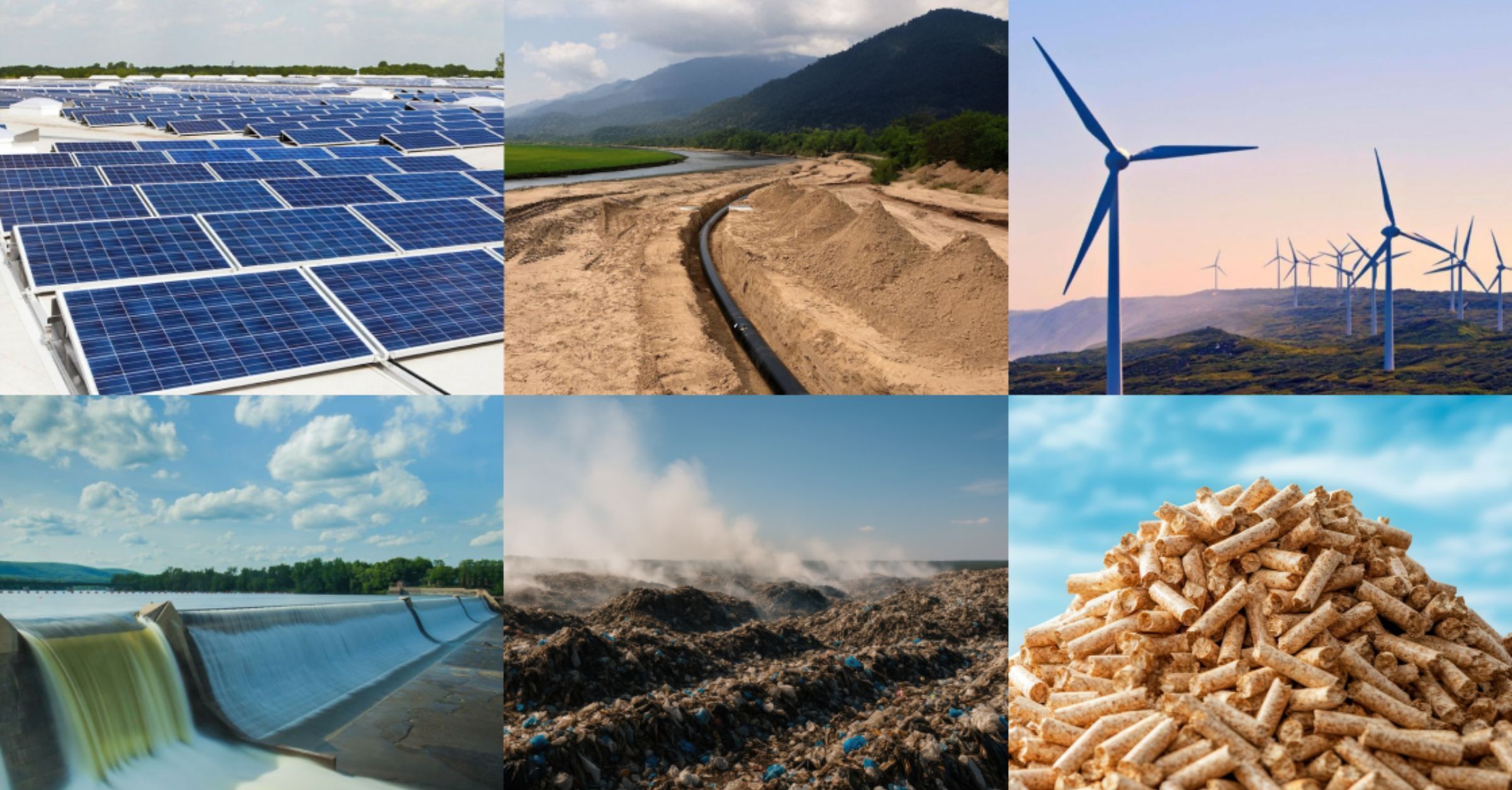
For the future of the heat supply, it is important to plan the local heating networks correctly. Local heating networks are considered one of the most effective solutions for replacing fossil heating systems at district level, while combining efficiency, security of supply, and local value creation.
In Europe, local and district heating cover around 15 percent of the heating energy demand. Scandinavia is driving the system change with fourth-generation low-temperature grids. In China, the district heating sector provides about 35 to 40 percent of the heat supply, with a growing share of non-fossil energy sources. Meanwhile, in the United States, a dynamic market has emerged, driven by tax incentives and the need for resilient infrastructure in urban areas. Anyone planning a local heating network today is therefore not only in line with national climate strategies but also within a globally expanding market of the future.
Basics for local heating network planning
The terms "district heating" and "local heating" are often used interchangeably, but there is a clear difference between the two. A local heating network supplies several buildings with centrally generated heat via a closed pipeline network. In contrast to classic district heating, the distances are significantly shorter – usually less than two kilometres – resulting in lower temperature and energy losses.
The central success factor is the bundling of heat demand. Without sufficient connection density, the system loses cost-effectiveness. For this reason, every local heating network project should begin with a structured needs analysis – ideally based on municipal energy concepts and in close coordination with property owners and suppliers.
Location is also a decisive factor: topography, settlement structure, connection density, and network route influence all influence both the technical design and eligibility for funding. With the forthcoming municipal heat planning obligation (to be implemented EU-wide by 2026), the systematic development of suitable clusters will become a strategic standard.
Another key planning criterion concerns stakeholder involvement. Those who communicate too late risk facing resistance – for example, regarding land use, connection costs, or operating concepts. Early engagement with the local authority, energy suppliers, investors, and affected residents is therefore not only legally but also economically necessary.
Energy sources in the local heating network: options and selection criteria
When planning a local heating network, the choice of the right energy source determines the efficiency, emissions, and operating costs of a local heating network. In addition to technical suitability, key factors include local availability, the CO₂ balance, and eligibility for funding within the framework of national programmes.
- Solar thermal energy: Particularly suitable for monovalent systems in new development areas or for feeding into seasonally buffered grids. According to the IEA (2023), around 0.38 million m² of new solar thermal collector area was installed in Germany, bringing the total installed area to approximately 22 million m². These plants generate around 9.3 TWh of heat and avoid about 6 million tonnes of CO₂ equivalents annually. Large collector fields are also becoming increasingly important in local and district heating networks: 58 solar thermal systems with a total gross collector area of around 163,000 m² already feed into German heating networks. (Sources: https://www.iea-shc.org/Data/Sites/1/publications/Solar-Heat-Worldwide-2024.pdf and https://www.iea-shc.org/Data/Sites/1/publications/Solar-Heat-Worldwide-2023.pdf)
- Heat pumps: Heat pump sales are recording double-digit growth rates worldwide. Depending on the electricity mix, they can reduce CO₂ emissions by up to 100 percent, especially in low-temperature networks with temperatures of ≤ 70 °C. (Sources: EU Commission / JRC – Heat Pump Efficiency & Decarbonisation Potential, 2022 and https://www.iea.org/reports/net-zero-roadmap-a-global-pathway-to-keep-the-15-c-goal-in-reach)
- Waste heat: Waste heat from data centres or industry is continuously available and virtually emission-free. Its systemic benefit lies in the dual use of existing energy flows, though availability is highly location-dependent.
- Biomass plants: Biomass can save up to 90 percent of CO₂ However, regulatory restrictions and controversy around long-term sustainability exist in many countries. Availability, delivery logistics, and local acceptance must be assessed early. (Source: https://energiesysteme-zukunft.de/themen/debatte/bioenergie and https://www.uni-hohenheim.de/expertenliste-bioenergie#c147576)
- Geothermal energy: With CO₂ savings of 60-80 percent, heat from the earth's interior is an ecological effective source. It involves high investment and development costs and is limited to suitable geological sites. (Source: https://www.sciencedirect.com/science/article/pii/S1364032125002758)
The choice of system – monovalent or multivalent – and the network temperature influence not only the energy source itself but also the pipeline dimensioning, routing, and control technology. Early determination of these factors is therefore essential for planning security and funding applications.
Routes and technology: how to make grid planning a success
A local heating network stands and falls with its technical design. Even the preliminary route alignment has a significant impact on profitability and operation, because line lengths, height differences, and crossing points determine both effort and long-term operating costs.
Topography, road use, and accessibility must be assessed at an early stage. The more compact the route, the lower the energy loss, especially at low flow temperatures. In cases involving above-ground buildings, bottlenecks, or listed areas, alternative routes or drilling methods should be considered.
At the core of technical planning is the hydraulic calculation. Pressure losses, flow volumes, and heat quantities must be precisely coordinated to optimise pump performance and determine the correct pipe diameters. This is particularly important for low-temperature networks with small ΔT, where even minor inaccuracies can lead to significant energy losses.
The choice of pipe system affects not the thermal performance but also installation time, service life, and maintenance requirements. Pipe systems made of PP plastic, such as aquatherm energy, offer the following advantages:
- Low weight
- Corrosion-free
- High stability
- High impact resistance
- Low internal roughness
- Chemical resistance
- Excellent weld quality
Cost-effectiveness and funding at a glance
A local heating network is a long-term infrastructure investment. Its economic viability depends largely on connection density, the chosen energy source, and the technical design. A reliable profitability calculation is therefore an integral part of any well-founded local heating network plan.
Investment parameters according to VDI 2067:
- Investment: €1,000–2,000 per kW of installed capacity
- Operating costs: €30–50 per kW per year
- Maintenance reserve: 2–5 percent of the investment amount
Specific values vary depending on the topography, flow temperature, grid size, and construction method. Networks with high connection density, short routes, and efficient energy sources (e.g., waste heat or heat pumps) perform significantly better in overall calculations.
Funding programmes can significantly improve the return on investment if integrated at an early stage:
- Germany: BEW grants of up to 45 per cent for grid construction, generation, and storage
- EU: InvestEU, Innovation Fund, ELENA funding
- USA: Tax credits of 10-30 per cent for renewable heating solutions (IRA, IIJA)
In addition, citizen participation, contracting models, or cooperative solutions can be employed, particularly in municipal projects or neighborhood development. These models reduce capital requirements while increasing local acceptance.
Legal requirements for local heating networks
Anyone planning a local heating network must address not only technical and economic considerations but also the legal framework at an early stage. Approval procedures, operator obligations, and municipal responsibilities vary by region, although the core requirements are structurally similar.
Permits and route use form the foundation. In Germany, a pipeline right is required for public roads under the Energy Industry Act (EnWG). In sensitive areas, environmental impact assessments and species protection studies may also be necessary. Internationally, comparable requirements exist, such as the NES Act in the USA or specific civil engineering regulations in major Asian cities.
Building law requirements primarily include civil engineering and pipeline construction regulations at the state or municipal level. Planning bottlenecks for local heating networks often arise from uncoordinated interfaces between construction and network planning, particularly when existing underground pipelines or planned new buildings are involved.
The following obligations apply to network operators during operation, among others:
- Metrology and billing according to recognised technical rules
- Security of supply across the entire grid structure
- Documentation and annual reporting, e.g., on energy feed-in, grid losses, and CO₂ balances
From Concept to Implementation: Steps in Practice
Depending on the project size, funding framework, and approval requirements, several years may pass between the initial idea, planning, and commissioning of a local heating network. It is crucial to schedule these processes realistically and to work with qualified partners from the outset.
1. Preliminary study: In this phase, the potential is assessed, including rough route alignment, initial heat demand analyses, cluster formation, and early economic feasibility indications. The aim is to provide a reliable basis for decision-making.
2. Concept phase: Technical variants are compared, energy sources are evaluated, and the grid temperature is determined. This phase also covers the preparation of subsidy applications, including CO₂ calculations and rough investment estimates.
3. Planning and approval: Detailed engineering, hydraulic design, tenders, and all necessary permits are completed in this stage. This phase is particularly sensitive, as delays can directly affect the overall schedule.
4. Construction phase: Implementation begins with civil engineering and pipe laying. Simultaneously, technology installation, connection of the energy source, and hydraulic balancing are carried out.
5. Commissioning and operation: After acceptance, the grid is started. Quality assurance, monitoring, and regular operation ensure long-term performance and reliability.
Conclusion: Benefiting in the long term with good local heating network planning
A local heating network is more than a technical infrastructure or a heat source for districts and buildings. It is a strategic instrument for decarbonisation, security of supply, and local value creation. Those who plan the network early, identify synergies, and engage stakeholders effectively lay the foundation for a system that is both ecologically sound and economically viable.
Are you planning a local heating network or facing a key decision?
Talk to us. We support you with experience, system expertise, and the right solutions for a sustainable heat supply.

Sources and further links
Related Links