How can the modern shipbuilding industry meet the increasing challenges of weight, corrosion and environmental sustainability? Plastic pipes offer an economical and technically sophisticated solution in shipbuilding compared to traditional metal pipe systems. This article highlights the unique properties and benefits of plastic marine piping systems. Find out how the pipes set new standards in shipbuilding with their lightweight design and corrosion resistance.
Advantages of plastic pipe systems in shipbuilding over metal pipes
The use of plastic pipe systems in shipbuilding offers several advantages compared to conventional metal pipes. For shipyards and planners, key factors include technical suitability, cost-effectiveness, and durability under maritime operating conditions. These benefits not only improve the efficiency and safety of maritime designs, but also contribute to cost efficiency. Innovative plastics can withstand the complex and demanding conditions to which shipboard piping systems are exposed at sea.
- Corrosion resistance: One of the biggest advantages of plastic pipes in shipbuilding is their natural resistance to corrosion. Unlike metal pipes, which can rust or corrode due to seawater and chemical exposure, plastic marine piping systems are immune to these influences. This reduces the need for frequent maintenance or early replacement.
- Low weight: Plastic pipes are significantly lighter than metal pipes. While steel has a nominal weight of 7800 kg/m³, many plastic pipes have only 980 kg/m³. This facilitates transport, handling and installation on board. A lighter piping system also helps to reduce the overall weight of the vessel, which can have a positive impact on operations and efficiency.
- Flexibility and adaptability: Plastic pipes offer greater flexibility in shipbuilding – ideal for installation in complex and narrow ship designs. Their ability to flex without breaking reduces the risk of cracking under pressure and vibration, which ships are constantly exposed to.
- Chemical resistance: Due to their material properties, plastic pipes resist a wide range of chemical substances that could damage metal pipes. This is important in systems that work with aggressive liquids such as wastewater, chemically treated ballast water, or cooling media.
- Thermal and acoustic insulation: Plastic pipes provide natural insulation properties that help control temperature within the system and reduce heat transfer. This is advantageous for heating, ventilation, and air conditioning systems. They also help reduce noise, improving on board comfort.
- Easy and fast installation: Due to their ease of handling and suitable connection systems, plastic marine piping systems can be installed more quickly and with less effort than metal pipes. This can reduce assembly times and simplify both prefabrication and on board installation.
Where plastic pipes are used in shipbuilding
Plastic pipes offer a wide range of applications in shipbuilding due to their robust, corrosion-resistant properties and low weight. These versatile systems are used in almost all areas of a ship, from essential supply systems through to more specialised operational areas.
Drinking water supply on board with plastic pipes
Plastic ship piping systems ensure safe and hygienic distribution of drinking water on board. This is particularly important on large passenger and cruise ships, which often accommodate thousands of passengers, where consistently high water quality is essential.
Corrosion-resistant plastic pipes are suitable for drinking water installations, as they are tasteless and odourless, as well as physiologically and microbiologically safe. Each ship must bunker drinking water in selected ports in compliance with relevant chemical and hygienic standards to avoid any health risk to passengers during their time at sea. In addition, varying water conditions such as changes in pH values or salt content can be better managed, helping to maintain consistent water quality on board.
Safe installation and high system reliability are also key in practical shipbuilding applications. Depending on the system, different pipe types, fittings, and prefabricated pipe assemblies are available. Plastic pipes are also resistant to humid and salty air as well as constant on board vibrations. They help prevent contact corrosion with the metal hull, reduce condensation in warm and humid climates, and minimise flow noise within the system.
Wastewater and disposal systems on board
Plastic pipe systems are resistant to the corrosive effects of wastewater and chemical media, making them well suited for transporting wastewater within ships. Due to their high chemical resistance to seawater and various types of wastewater, they can be reliably used in on board disposal systems. The smooth internal surface of plastic pipes also reduces the adhesion of solids, helping to minimise the risk of deposits and blockages within the wastewater system.
HVAC and cooling water systems on ships and offshore installations
For heating, ventilation, and air conditioning systems, plastic pipes in shipbuilding offer advantages due to their low weight, thermal properties, and resistance to maritime conditions. On ships and offshore installations, an efficiently planned HVAC system is essential for the comfort and safety of passengers and crew. The design must take into account the type of vessel, environmental conditions, and health and safety requirements.
In HVAC and cooling water systems on ships, cooling water units and absorption chillers are often connected to cabin ventilation units and electronic cooling systems via distribution networks. Water or water-glycol mixtures are typically used for energy transfer to reduce the need for large refrigerant piping. Depending on the classification society and installation location, such plastic ship piping systems may also be used in seawater applications, which places special demands on corrosion resistance and material selection.
Compared to metal or GRP pipes, plastic pipes are significantly lighter, which can simplify installation and reduce the overall weight of the vessel. This also shows how modern plastic piping systems in shipbuilding offer reliability and faster installation. At the same time, they support prefabrication and are designed for long service life under appropriate operating conditions.
Plastic pipes in shipbuilding for ballast water systems
Ballast water systems are crucial for the safety and stability of ships. They compensate for changing load conditions and help to reliably regulate lateral stability, rolling, and trim. The requirements for controllability, operational reliability, and material resistance of the pipe systems used are correspondingly high.
For the transport and treatment of ballast water, plastic pipes can be a suitable solution in shipbuilding, especially due to their corrosion resistance, smooth internal surfaces, and chemical resistance. They can be used in process steps such as pre-treatment, filtration, and disinfection, supporting systems that must meet international environmental and safety requirements.
Depending on the installation location and system design, additional requirements must be considered, such as fire resistance, bulkhead and deck penetrations, and, where necessary, remotely operated metallic shut-off devices at the boundaries of certain areas. This is particularly relevant under maritime conditions, as conventional materials can corrode more quickly in contact with ballast water and saline media. The light weight of plastic marine piping systems can also simplify installation and have a positive impact on the overall weight of the vessel.
Efficient processing of plastic pipes in shipbuilding in shipyards
Plastic pipe systems offer advantages when installed in the confined spaces of shipyards and on board vessels. Plastic pipes and fittings are briefly heated using specially developed tools and then joined seamlessly. This process fuses the material into a homogeneous, leak-tight connection, ensuring a secure and permanent bond.
A wide range of tools are available for processing plastic pipes in shipbuilding – from manual equipment to CNC-controlled welding machines. While butt welding is mainly carried out in the workshop, flanged connections can be used for on-site installation. This supports prefabrication of assemblies and can reduce assembly times and coordination effort at the shipyard.
For applications that require increased resistance to seawater, flanges are available in pressure class PN 10 and, on request, also PN 16. Flange adapters are also available as standard components or customised solutions for butterfly valves. Seals are supplied in EPDM, further enhancing system reliability.
Prefabrication of plastic pipe assemblies in shipbuilding
Modern ships require a wide variety of fluid distribution systems, for which standardised or modular solutions are often insufficient. Each shipbuilding project has unique requirements that demand individual solutions. That is why it is worth taking advantage of the advantages of prefabribation of manifolds and plastic pipe assemblies, allowing them to be specifically tailored to different media types, applications, ship design conditions, and relevant regulations.
For shipbuilding, where complex and precise structures are required, prefabrication enables efficient production and delivery of ready-to-install systems worldwide. The process begins with the submission of design data, including 3D drawings and sketches with exact measurements. This data can be used to process 3D scans, enabling precise and efficient preparation for the production of plastic piping systems.
Based on the data analysis, material extracts, technical drawings, and project-specific solutions can be developed. This allows shipyards and planners to better prepare assembly processes, reduce interfaces, and integrate assemblies precisely into the respective shipbuilding project.
Practical examples of aquatherm plastic pipes in shipbuilding
The following examples show how plastic pipes can be used in shipbuilding under real project conditions. They also highlight the importance that shipyards, planners, and operators place on corrosion-resistant, easy-to-install, and application-specific pipe systems. As a partner, aquatherm supports shipbuilding projects with suitable system solutions for a wide range of on board applications.
Hybrid-Superyacht Artefact
The hybrid superyacht Artefact, built by the German shipyard Nobiskrug, represents a turning point in luxury yacht construction. With a length of 80 metres and a gross tonnage of 2,999, she is one of the highest-volume superyachts in her class and among the first to comply with the strict IMO Tier III emission standards. The Artefact integrates advanced technologies such as solar panels and a battery storage system, enabling periods of completely emission-free operation. For the drinking water supply and wastewater recycling systems, aquatherm green was chosen due to its corrosion resistance.
Research Vessels "Snow Dragon 1 and 2"
The research vessels Snow Dragon 1 and Snow Dragon 2 are designed for polar and Antarctic expeditions and are equipped with aquatherm green and aquatherm blue systems for drinking water and wastewater management. These systems were selected for their excellent corrosion resistance and chemical resistance. They support reliable ship operation even under demanding maritime conditions. The corrosion-free polypropylene material used in aquatherm systems is particularly well suited for cold and saline environments.
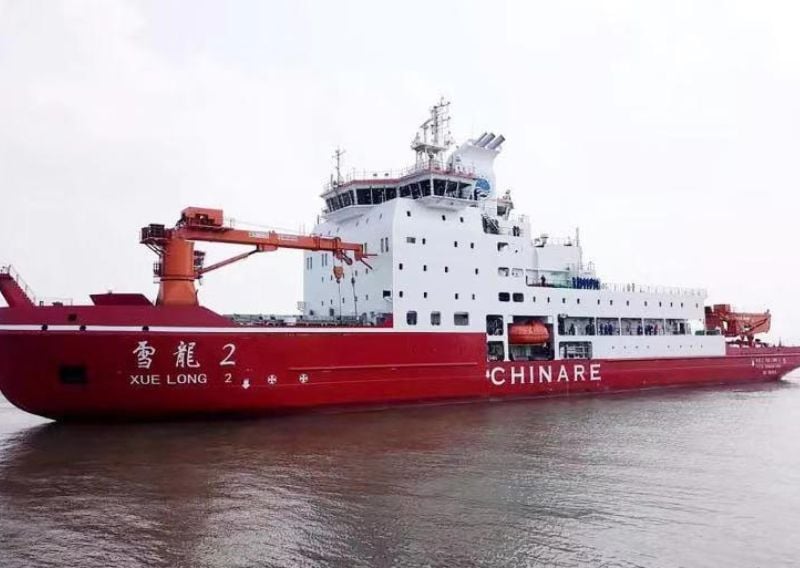
Research vessel „Snow Dragon“
Dredging vessel in Curaçao
A specialised dredging vessel in Curaçao uses aquatherm blue for its ballast pipes to improve efficiency in the extraction and transport of water-sand mixtures. This application demonstrates the durability and reliability of plastic pipes in shipbuilding and in the demanding conditions of port operations.
Barge Arcalupa
The Italian barge Arcalupa has a deadweight of around 4,000 tonnes and can transport heavy loads of up to 14,000 tonnes. As a mobile dry dock, it can be completely flooded within approximately 10 hours. It is used to transports ship hulls, cruise ships, concrete masts, and extensive steel structures for the oil and gas industry.
For its functions, Arcalupa uses aquatherm blue pipe systems for the ballast water lines and tank ventilation across its 20 ballast tanks. aquatherm blue was selected due to its corrosion resistance and ability to withstand extreme operating conditions in aggressive saltwater environments.
Conclusion: Using plastic pipes in shipbuilding in a technically sound way
In many maritime applications, modern plastic piping systems offer an economically and technically convincing solution. Their key advantages lie in their low weight, corrosion and chemical resistance, and ease of installation. Depending on the application and relevant approvals, plastic pipes in shipbuilding can contribute to the efficient and reliable design of drinking water, HVAC, wastewater, and ballast water systems on board.
To ensure this potential is fully realised in day-to-day project work, suitable systems must be combined with a partner experienced in maritime applications. As a partner, aquatherm supports shipyards, planners, and operators with coordinated piping systems, technical advice, and solutions for prefabrication and on board implementation.
Are you planning a shipbuilding project and looking for a technically suitable solution for your pipe systems? Get in touch with aquatherm and learn more about applications, prefabrication, and implementation on board.

.jpg)

